India is going through a massive phase of infrastructure growth. From highways and rail corridors to ports, airports, metro projects, and industrial zones, construction activity is happening at a scale we have not seen before. The government push, private investments, and growing urban demand are all coming together to reshape the country.
But behind every bridge, factory, or high-rise structure, there is one industry quietly making it all possible: the lifting, hoisting, and material handling industry. In 2026, this sector is not just supporting infrastructure growth; it is evolving because of it.
The Scale of Infrastructure Growth
India’s infrastructure plans are not small. Projects like expressways, dedicated freight corridors, smart cities, and logistics parks are being developed across the country at a rapid pace. This expansion is leading to more construction sites, larger project sizes, faster completion timelines, and a much higher demand for efficiency across every stage of execution.
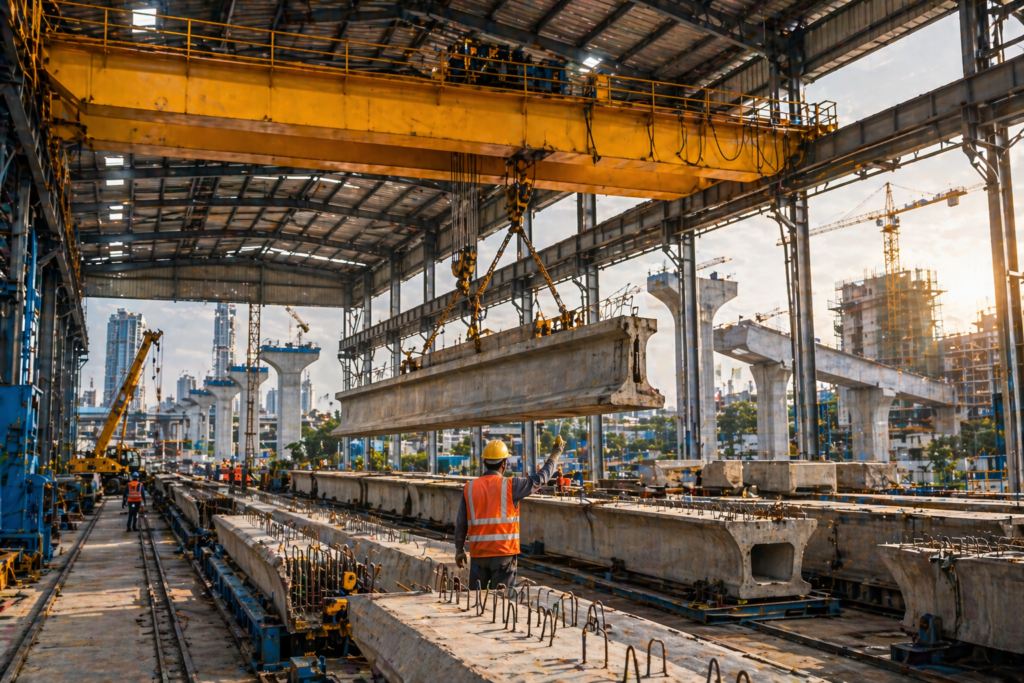
All of this directly increases the need for reliable lifting and material handling solutions. Cranes, hoists, gantry systems, and other handling equipment are no longer optional but essential for smooth operations. They play a critical role in ensuring that projects stay on schedule and are completed efficiently.
Rising Demand for Advanced Equipment
With projects becoming larger and more complex, the demand for basic equipment is gradually reducing. Companies are now looking for machines that are more efficient, reliable, and easy to operate. The focus has shifted from just getting the job done to doing it faster, safer, and with better performance.
In 2026, there is a clear move towards higher-capacity cranes, precision lifting solutions, energy-efficient systems, and equipment with improved safety features. Buyers are no longer only concerned about how much a machine can lift. They are paying equal attention to how efficiently it performs, how long it will last, and what it will cost to maintain over time.
Speed and Efficiency Are Now Priorities
Infrastructure projects today are time-bound, and delays can be costly, often leading to penalties and increased pressure on budgets. This puts contractors and developers under constant pressure to complete work faster, reduce downtime, and improve coordination across the site to keep everything moving as planned.
Lifting and material handling equipment plays a major role in achieving this. Faster lifting cycles, smoother operations, and reliable performance can directly impact project timelines. Companies that invest in efficient equipment are better positioned to deliver projects on schedule while also keeping operational costs under control.
Focus on Safety and Compliance
As project sizes continue to grow, safety becomes even more critical. There is increasing awareness around worker safety, equipment reliability, and the need to follow proper regulatory compliance. Companies are realizing that maintaining high safety standards is not just about meeting rules, but also about ensuring smooth and uninterrupted operations.
Modern lifting solutions are now designed with advanced safety systems, load monitoring, and better control features. At the same time, businesses are investing more in training operators and following proper safety practices on site. In the long run, this helps reduce accidents, avoid delays, and protect both people and profits.
Growth of Automation and Smart Technology
Technology is changing the way lifting operations are managed, making them more efficient and reliable. In 2026, many companies are adopting remote-operated cranes, smart monitoring systems, data-driven maintenance tools, and automation for repetitive lifting tasks. This shift is helping businesses move away from manual processes and towards more controlled and consistent operations.
These technologies reduce manual errors, improve accuracy, and make operations more predictable. They also allow companies to track performance in real time and plan maintenance before issues arise. As a result, businesses are able to improve productivity while keeping operational costs under control.
Increased Competition and the Need to Stand Out
As demand continues to grow, more companies are entering the market, which increases competition among manufacturers, suppliers, and service providers. This makes it more challenging for businesses to stand out and capture the attention of customers.
To stay ahead, companies need to focus on offering better quality, providing reliable after-sales support, understanding customer needs, and delivering real value instead of competing only on price. Businesses that adapt quickly to market expectations and consistently improve their offerings are the ones that will succeed and grow in this environment.
Opportunities for Local Manufacturers
India’s push towards domestic manufacturing is creating strong opportunities for local players. With increasing support for local production, many companies are expanding their manufacturing capacity, improving product quality, and investing in research and development to stay competitive.
This shift is helping reduce dependency on imports while making equipment more accessible and cost-effective for buyers within the country. As a result, local manufacturers are becoming stronger and more capable of meeting the growing demand in the market.
The Role of Skilled Workforce
As technology continues to improve, the need for skilled operators and technicians is also increasing. Modern equipment requires a better understanding of controls, knowledge of safety systems, and the ability to handle advanced features efficiently. Without the right skills, even the best equipment cannot deliver its full potential.
Companies that invest in training their workforce see clear benefits in day-to-day operations. Skilled teams perform better, make fewer mistakes, and handle equipment more effectively. This not only improves productivity but also helps extend the life of the equipment and reduces overall operational costs.
Impact on Maintenance and Service Industry
With more equipment being used across projects, the demand for maintenance and service support is growing steadily. Companies are realising that keeping machines running efficiently is just as important as investing in new equipment, especially when project timelines are tight.
There is a clear shift towards planned maintenance instead of reactive repairs, along with the need for faster service response and better availability of spare parts. Because of this, a strong and reliable service network has become a key factor when choosing equipment suppliers, as it directly impacts uptime and overall project efficiency.
How This Impacts Business Growth
For companies in the lifting and material handling industry, this infrastructure boom presents a significant opportunity for growth. It opens doors to new markets, larger projects, long-term contracts, and partnerships with major developers, creating a strong foundation for expanding business operations.
At the same time, it also brings challenges such as higher expectations, tighter timelines, and the need for continuous improvement. Businesses that stay updated with industry trends, invest in the right technology, and focus on delivering quality will be in the best position to take advantage of these opportunities.
Conclusion:
India’s infrastructure boom is not just about building roads and buildings. It is about creating a stronger foundation for economic growth.
The lifting, hoisting, and material handling industry is at the centre of this transformation. As demand increases, the industry is becoming more advanced, more efficient, and more important than ever before.
In 2026, the companies that adapt to these changes, understand market needs, and focus on long-term value will be the ones that truly grow.